
Colour & Meaning in Desi Fashion
Red, gold, green, white, yellow: in desi fashion every colour carries meaning — and it shifts between occasions and traditions. A guide through symbolism, occasion and your own complexion.
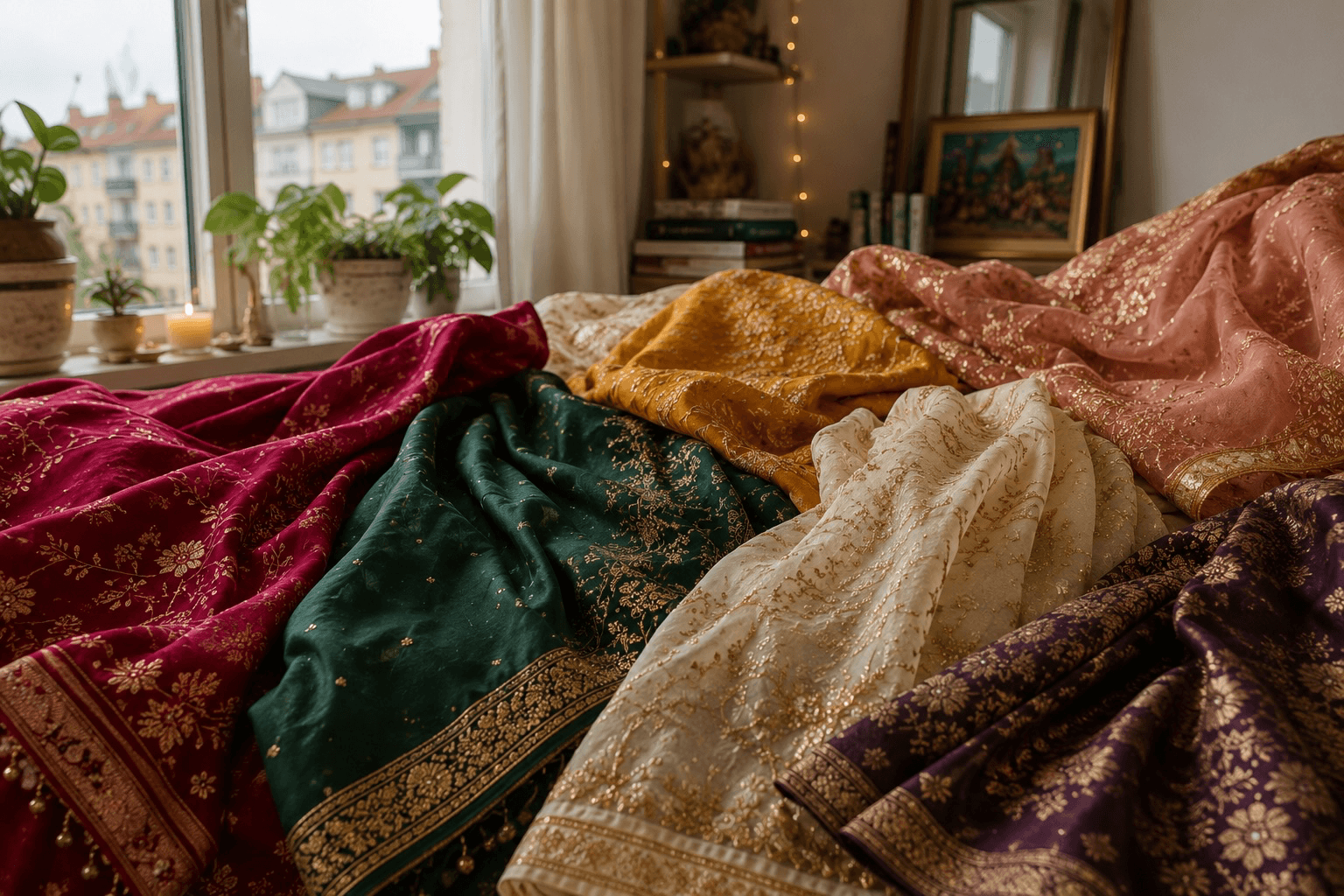
In South Asia, colour is never just taste — it is language. The same colour can mean joy or mourning, celebration or devotion, depending on occasion, region and tradition. Understanding this grammar means choosing not only more beautifully but also more correctly. A guide.
Red: joy, love, new beginnings
Red is the colour of celebration above all: across much of India, Pakistan and Bangladesh it is the classic bridal colour, a symbol of luck, fertility and a new chapter of life. A bride in red and gold is a familiar image — and precisely for that reason this combination belongs to her. As a guest, then, wear red thoughtfully, especially for the ceremony itself.
Gold and yellow: prosperity and the sacred
Gold stands for prosperity, radiance and the festive; it accompanies almost every great occasion, whether as fabric, zari or jewelry. Yellow, in turn, is the colour of purity, spring and blessing — at the Bengali holud (the word simply means "yellow") and at haldi ceremonies across the subcontinent, everything turns on sunny tones meant to bring luck and a good start.
Green: life, fertility — and faith
Green symbolises life, nature and fertility and is a traditional colour for the newly married. In Muslim communities — and therefore for many families in Pakistan and Bangladesh — green carries additional religious meaning and is a beloved, dignified choice for Eid. A green saree or Anarkali is festive without contesting the bride's red.
White: purity and mourning at once
White is the most ambivalent colour. It stands for purity and peace — yet in many Hindu and other South Asian traditions it can be the colour of mourning, worn at funerals and by widows. That makes pure white tricky at festive occasions; cream, ivory or gold-broken tones are the safe, elegant alternative.
Occasion beats rule
In the end the occasion decides. Eid loves green, pastels and muted gold; mehndi and holud call for yellow, orange and pink; weddings for deep, saturated tones (except bridal red, if you're a guest); a condolence visit for subdued white or plain, dark colours. And traditions shift the accents: a Bengali bride often wears red with a white border, Pakistani bridal fashion celebrates blush and gold, and Indian brides increasingly embrace wine, sage or ivory.
Colour, complexion and season
Beyond the symbolism, a colour should above all flatter you. Warm complexions glow in gold, coral, olive and deep red; cooler complexions in emerald, sapphire, berry and cool pink. Deep jewel tones look especially refined in winter and in the evening, while airy pastels and light colours belong to summer and daylight. Our position stays the same as always: the colour has to suit the woman, not the algorithm — and if you're torn between two tones, send us a photo in daylight on Instagram (@tuli_germany). We'll advise honestly which colour truly makes you shine.
Frequently asked questions
Why do so many brides wear red?+
Across much of South Asia, red is the colour of joy, love and fertility, and thus the classic bridal colour — often paired with gold. Regional traditions and modern brides are now widening the spectrum to blush, wine, sage or ivory too.
Which colour suits Eid?+
Green is a beloved, dignified choice with religious meaning for many Muslim families; pastels, muted gold and elegant jewel tones work just as beautifully. Festive, but not as loaded as a bridal robe.
Can I wear white to a festive celebration?+
Pure white is tricky because it is a mourning colour in many South Asian traditions. Reach instead for cream, ivory or gold-broken tones — festive and safe at once.
How do I choose a colour to suit my complexion?+
Warm complexions glow in gold, coral, olive and deep red; cooler ones in emerald, sapphire, berry and cool pink. When unsure, send us a daylight photo — we'll advise honestly which colour makes you shine.
Hand-picked for moments that matter
Curated desi fashion with honest photos, clear sizing and shipping from Germany.