Sarees
The Saree: Six Metres of History
From the Indus Valley to the red carpet: why one unstitched length of cloth may be the most elegant garment in the world — and how to wear it.
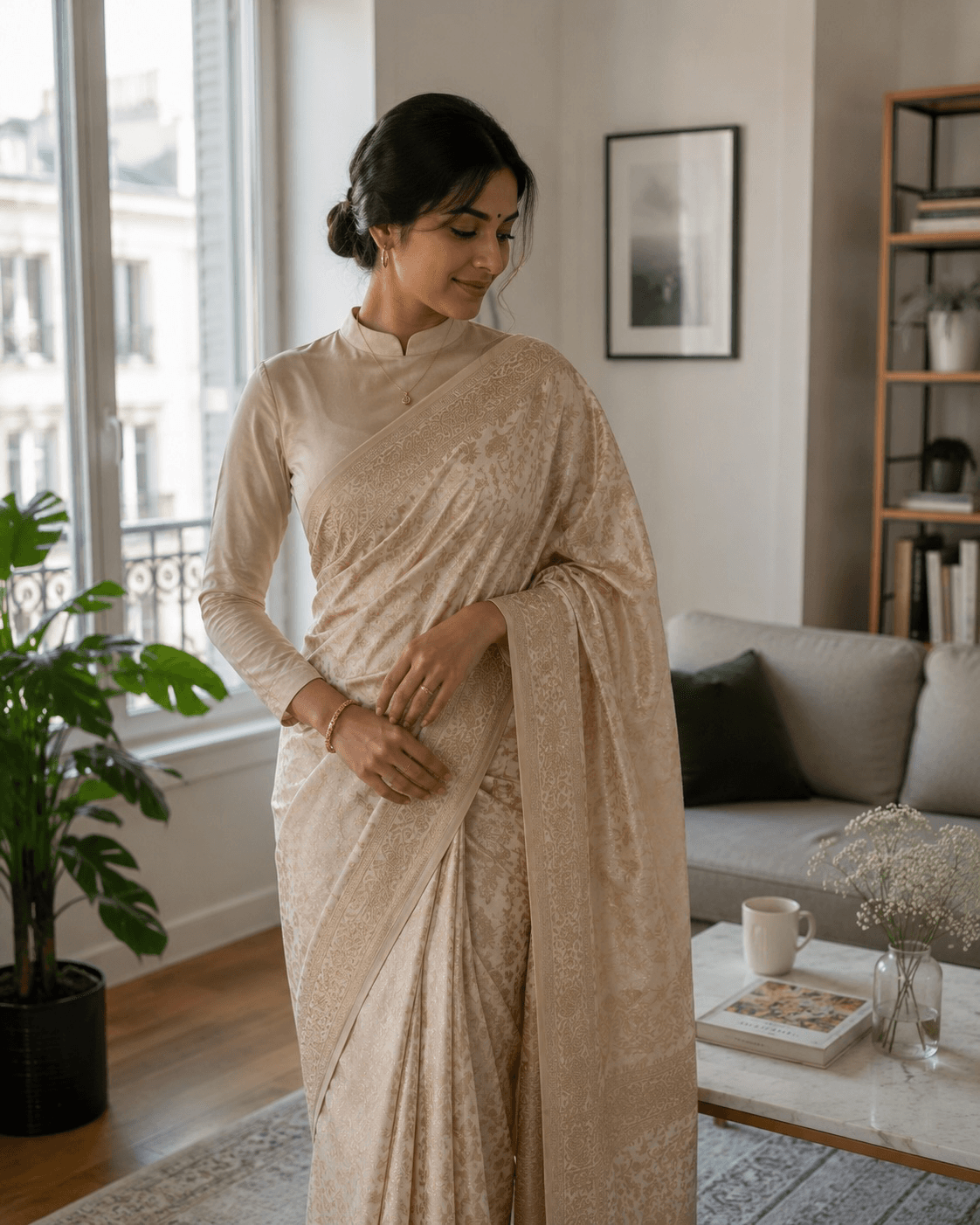
A saree is neither a dress nor a bolt of cloth — it is both at once: five to nine metres of fabric that only become a garment on the body. That is precisely its genius. Every wearer shapes it anew, every day, for every occasion.
Older than most of the world's fashions
Draped, unstitched clothing has a history of millennia on the subcontinent: figurines from the Indus Valley civilisation already show wrapped cloth, and early Sanskrit literature speaks of the "sati" — a strip of fabric. While Europe developed patterns and corsets, South Asia perfected the opposite: a garment without a single seam that follows every body.
More than a hundred ways to tie a saree
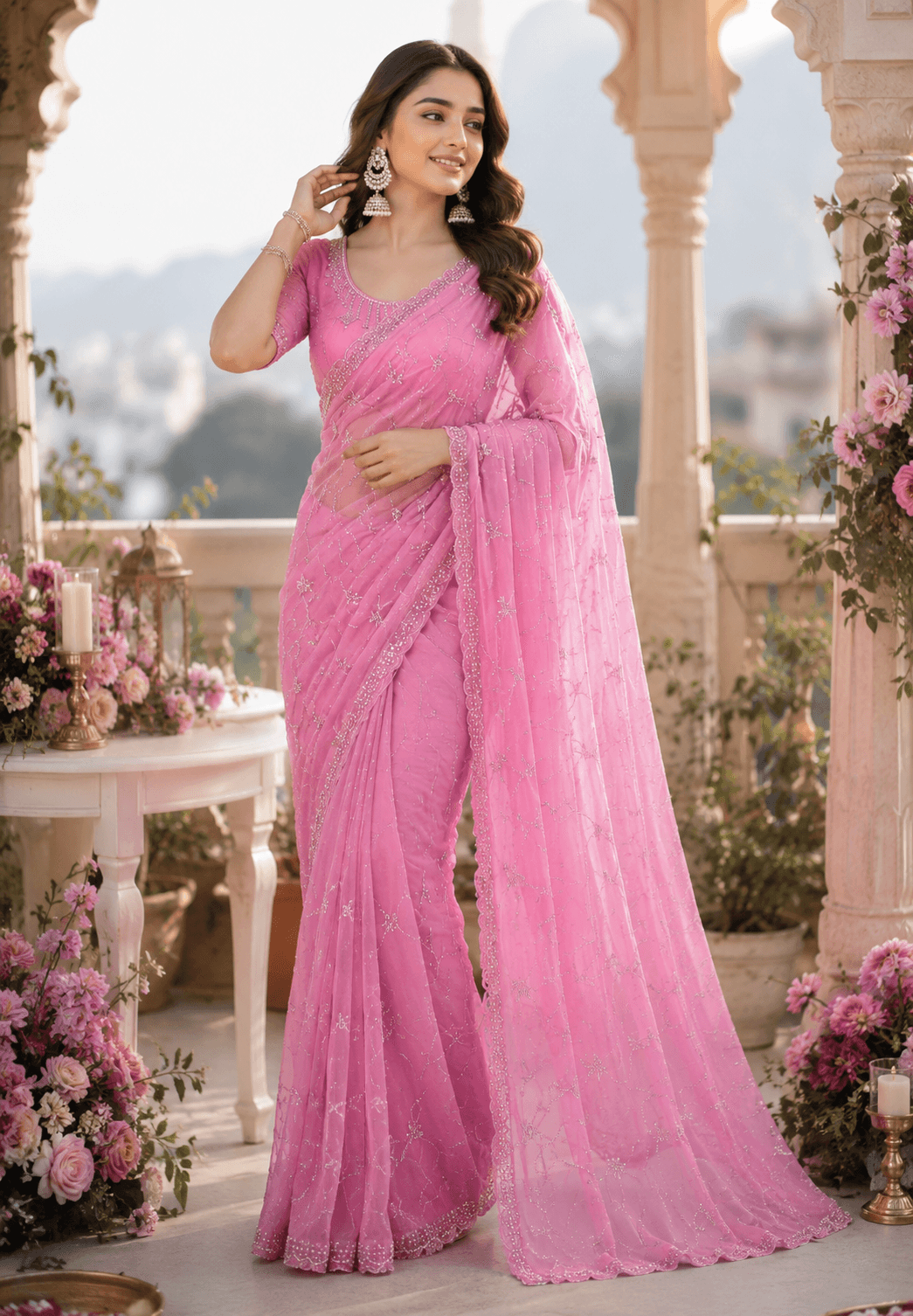
Today's most familiar drape — over the left shoulder, pleats at the front — is the Nivi style from Andhra Pradesh. It is only one of many: textile scholar Rta Kapur Chishti has documented over a hundred regional drapes, from Bengal's atpoure with the house keys knotted into the pallu to Maharashtra's trouser-like nauvari. The blouse (choli) and petticoat, so standard today, only became widespread in the colonial nineteenth century.
What makes a saree precious
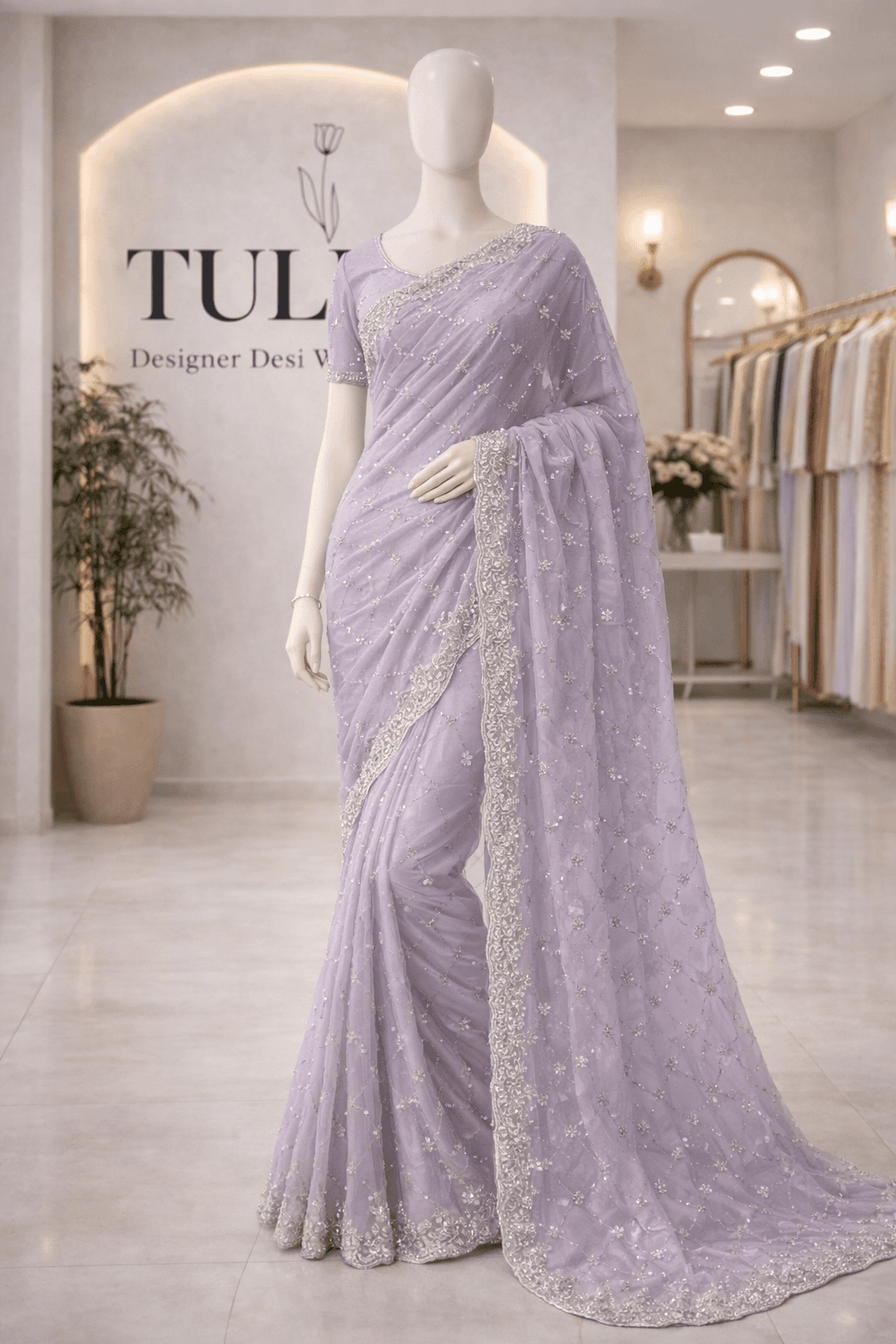
With a saree, the weave matters, not the cut. A Banarasi from Varanasi — famed since Mughal times for brocade woven with gold and silver zari thread, and protected by a Geographical Indication since 2009 — can take weeks on a handloom. A Kanjeevaram from Tamil Nadu carries heavy silk with a contrasting border. A Jamdani from Bangladesh feels like woven air (we devote a separate journal entry to it). And a light georgette or chiffon saree is the easy entry point for any celebration.
Which saree for which occasion?
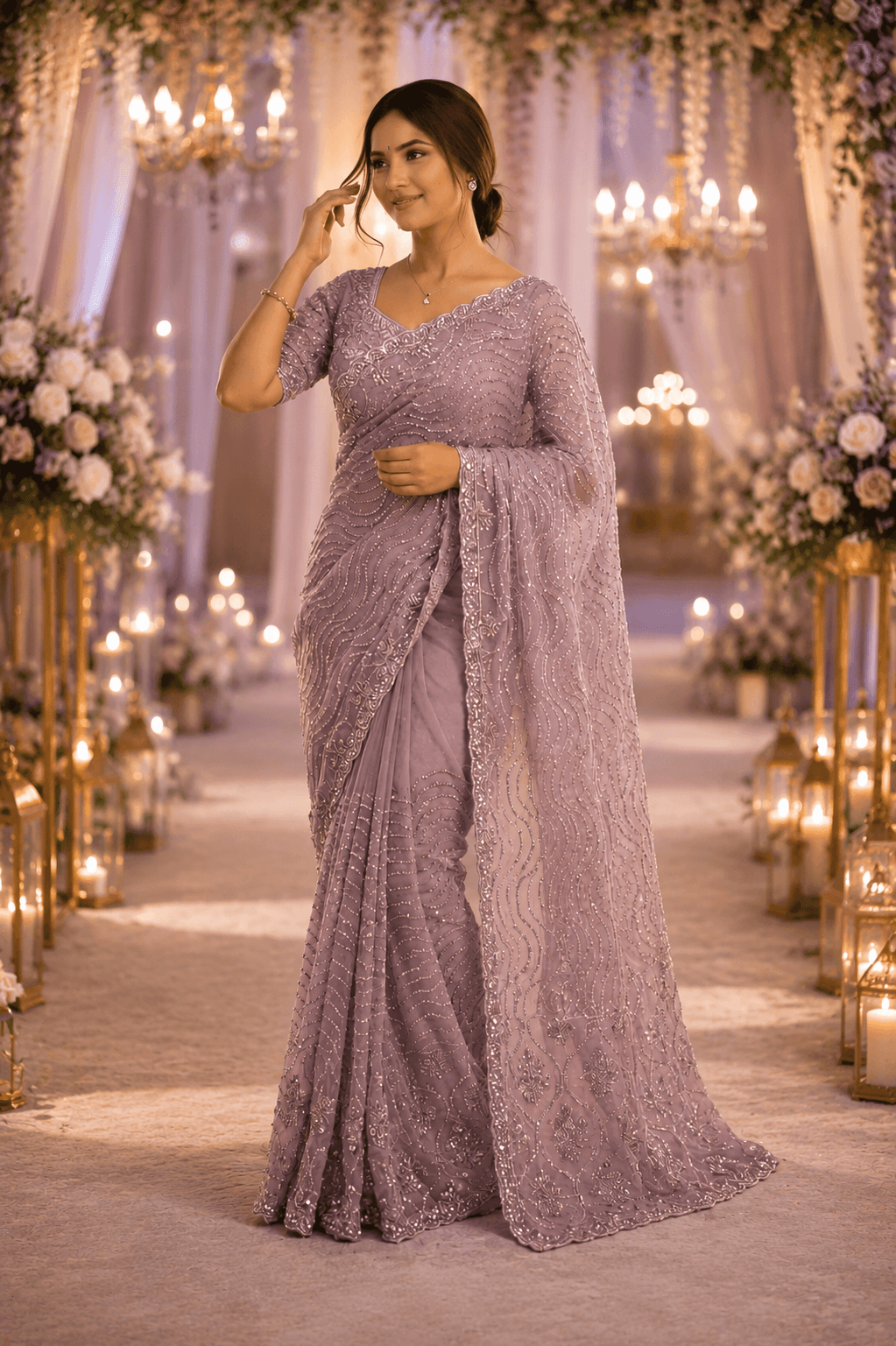
For weddings and walima: Banarasi, Kanjeevaram or richly embroidered silk in deep tones. For Eid and festive evenings: Jamdani, chiffon with fine embroidery, restrained zari. For the registry office or a dinner party: plain silk or crêpe with statement jewelry. Our rule of thumb: the richer the weave, the quieter the jewelry — and vice versa.
Don't fear the six metres
No one is born with saree routine. With a well-tied petticoat, the experience of two dozen safety pins and ten minutes of practice, the Nivi drape comes together surprisingly fast. And if it doesn't: message us — we'll help personally, by chat or video call. That's what service means to us.
Shop the guide
Hand-picked and ready to order