Sarees
Jamdani and the Lost Muslin of Dhaka
They called the finest fabric in history "woven air". Its heir is alive: Bangladesh's Jamdani weaving — UNESCO heritage on the loom.
There was once a fabric so fine that an entire saree could be drawn through a finger ring. The muslin of Dhaka — woven from "Phuti Karpas" cotton that grew on the banks of the Meghna — dressed Roman patricians, Mughal empresses and, later, the salons of Europe. Travellers called it "woven air": the finest qualities are said to have carried several hundred threads to the inch.
The rise and unmaking of a wonder
Under the Mughals, Bengal's muslin became the most coveted textile in the world, with Dhaka at its centre. Colonial rule brought the fall: the East India Company squeezed prices, British mill cloth flooded the markets, weaving families gave up — within a few generations a centuries-old chain of knowledge snapped. The legendary cotton plant itself was thought lost. Only recently have initiatives such as the Bengal Muslin project in Bangladesh traced the old plant and, in 2021, woven a muslin of historic fineness again — cultural history reclaimed thread by thread.
Jamdani: the living heir
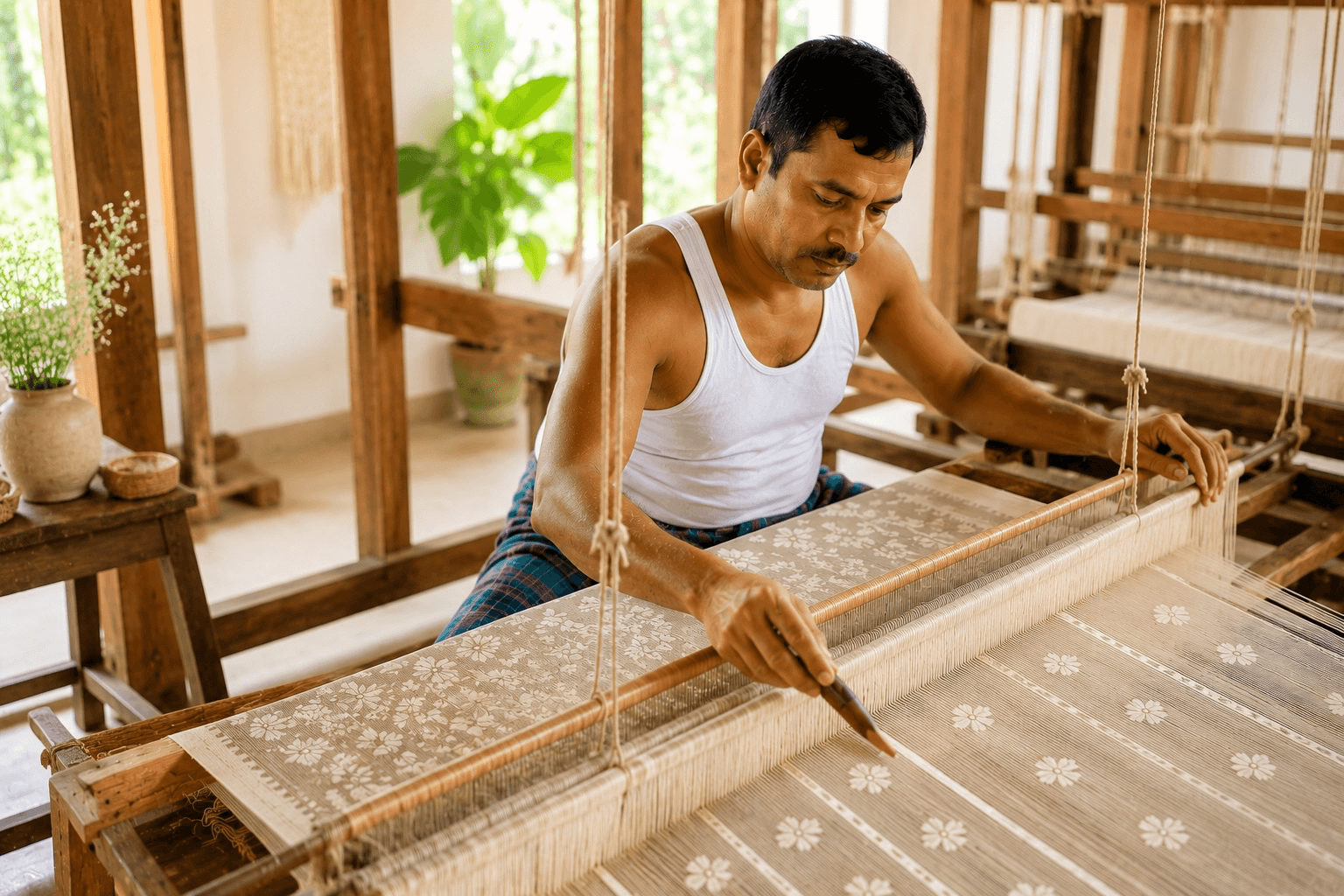
What never quite disappeared is muslin's most artful sister: Jamdani, hand-woven to this day in Narayanganj on the Shitalakshya river near Dhaka. Its technique is unique: while the gossamer ground cloth grows on the loom, the weavers lay in extra weft threads motif by motif — without a drawing, from memory. Every pattern, whether paisley, vine or geometric dots, is literally woven into the cloth, not embroidered onto it. A single fine Jamdani saree can take weeks to months.
World heritage, with a seal of authenticity
In 2013 UNESCO declared traditional Jamdani weaving Intangible Cultural Heritage of Humanity; in 2016 the Jamdani saree became the first product ever to receive a Geographical Indication (GI) from Bangladesh. Both honour what connoisseurs have long known: a real handwoven Jamdani is not fabric off a roll but applied memory — family knowledge passed down at the loom for generations.
Wearing Jamdani
Jamdani is light, breathable and surprisingly wearable: perfect for Eid, summer weddings, mehndi evenings or any occasion that calls for elegance without weight. Pair it with quiet gold jewelry and let the weave do the talking. And treat it like the heirloom it can become: wash gently, dry flat, store in cotton.
When you hold a Jamdani from TULI, you hold two thousand years of Bengali weaving. We think you should be able to feel that.
Shop the guide
Hand-picked and ready to order