Kameez & Suits
What to Wear as a South-Asian Wedding Guest
Mehndi, sangeet, the big day and the walima — a South Asian wedding has many evenings and just as many dress codes. An honest guide, including the one rule that really matters.
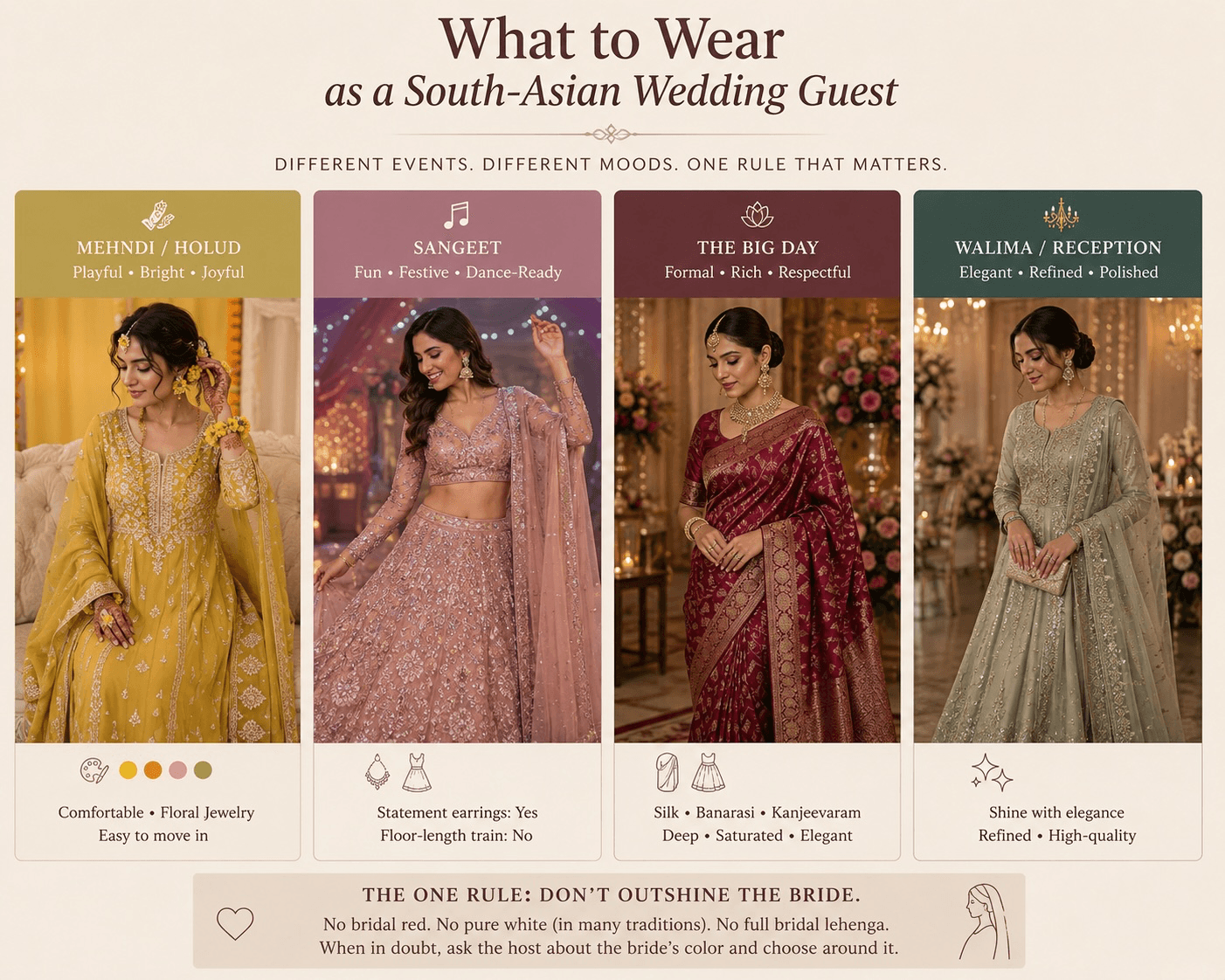
An invitation to a South Asian wedding is rarely an invitation to one evening — often it's three, four or five events spread over several days, each with its own mood, palette and dress question. Don't worry: the logic is learnable, and in the end there is only one truly iron rule.
Mehndi and holud: colour, flowers, movement
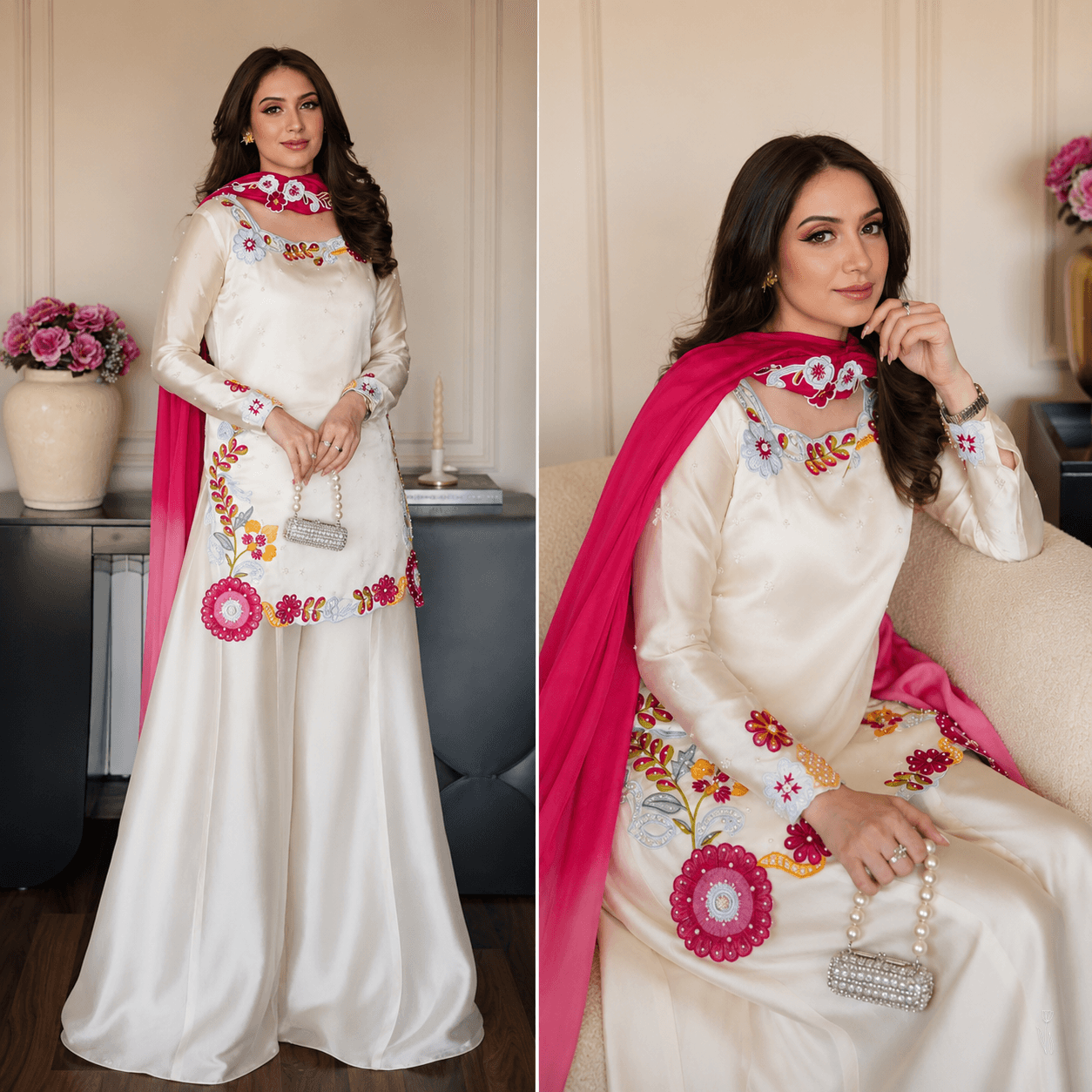
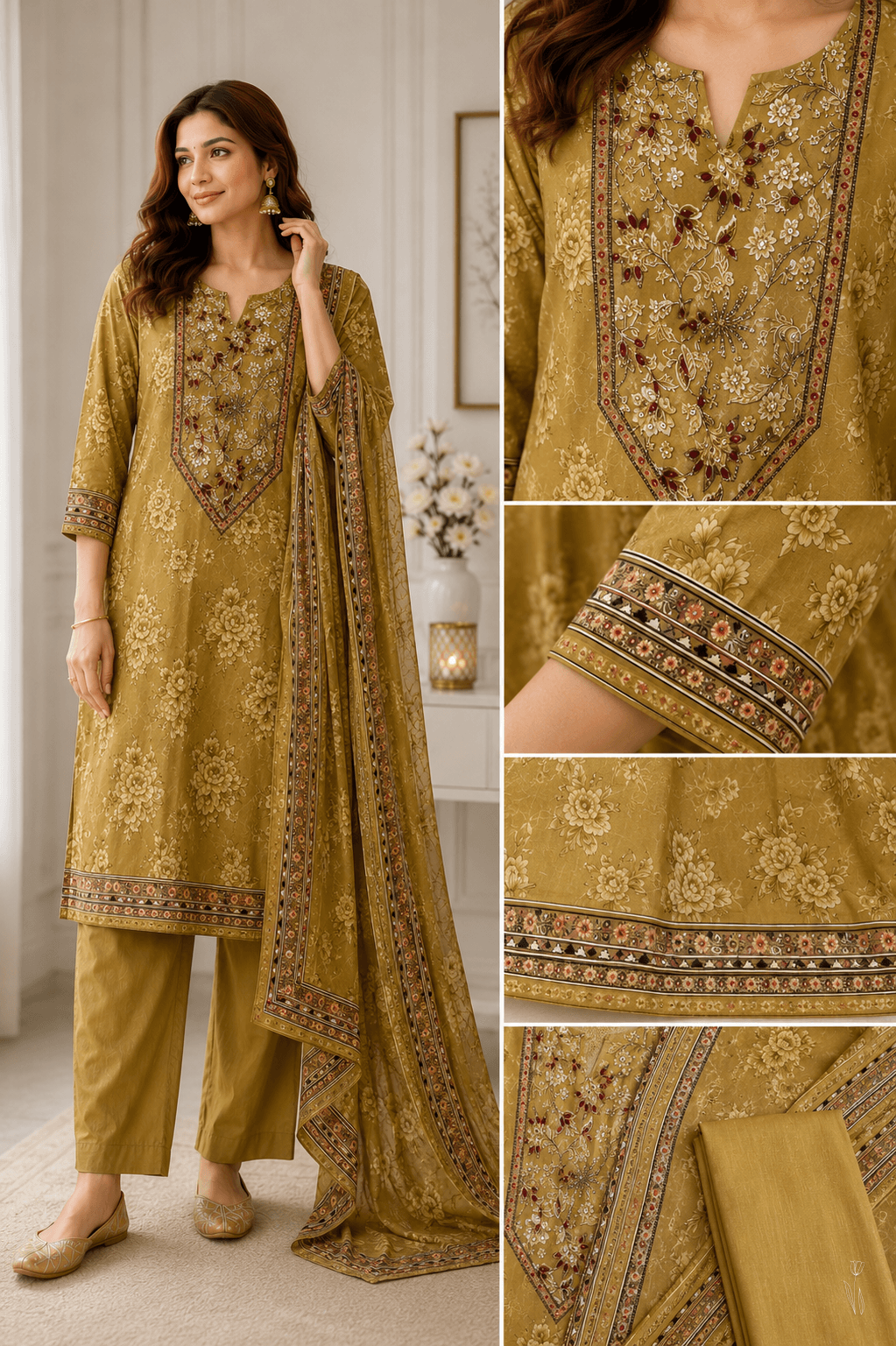
The henna night (mehndi) and the Bengali holud (yellow) are the most playful celebrations. Bright, joyful tones rule here — yellow, orange, green, pink — often in comfortable Anarkalis or embroidered three-pieces, with floral jewelry rather than heavy gold. There's eating, laughter and henna; wear something that copes with sitting on the floor and spontaneous dancing.
Sangeet: the night for dancing
The sangeet is the music-and-dance night, in many families the most exuberant event of all. This is where you can shine: a festive medium-weight lehenga, a flowing Anarkali, a saree you can move confidently in. Statement earrings yes, a floor-length train no — you want to dance, not trip.
The big day: festive, but not bridal
The ceremony itself is the most formal occasion: rich silk, a Banarasi or Kanjeevaram saree, an elegant lehenga or a heavily embroidered Anarkali in deep, saturated tones. And here lies the rule that outshines all others — literally.
The one rule: don't upstage the bride
Don't outshine the bride. In practice that means: no bridal red (and, depending on tradition, no pure white either, which in many South Asian cultures is the colour of mourning), no full bridal lehenga in the heaviest embroidery, no look that demands more attention than hers. When in doubt, ask the host family about the bride's colour and then deliberately choose around it. Within that boundary you are absolutely allowed to be festive and beautiful — restraint doesn't mean invisibility.
Walima and reception: shine with elegance
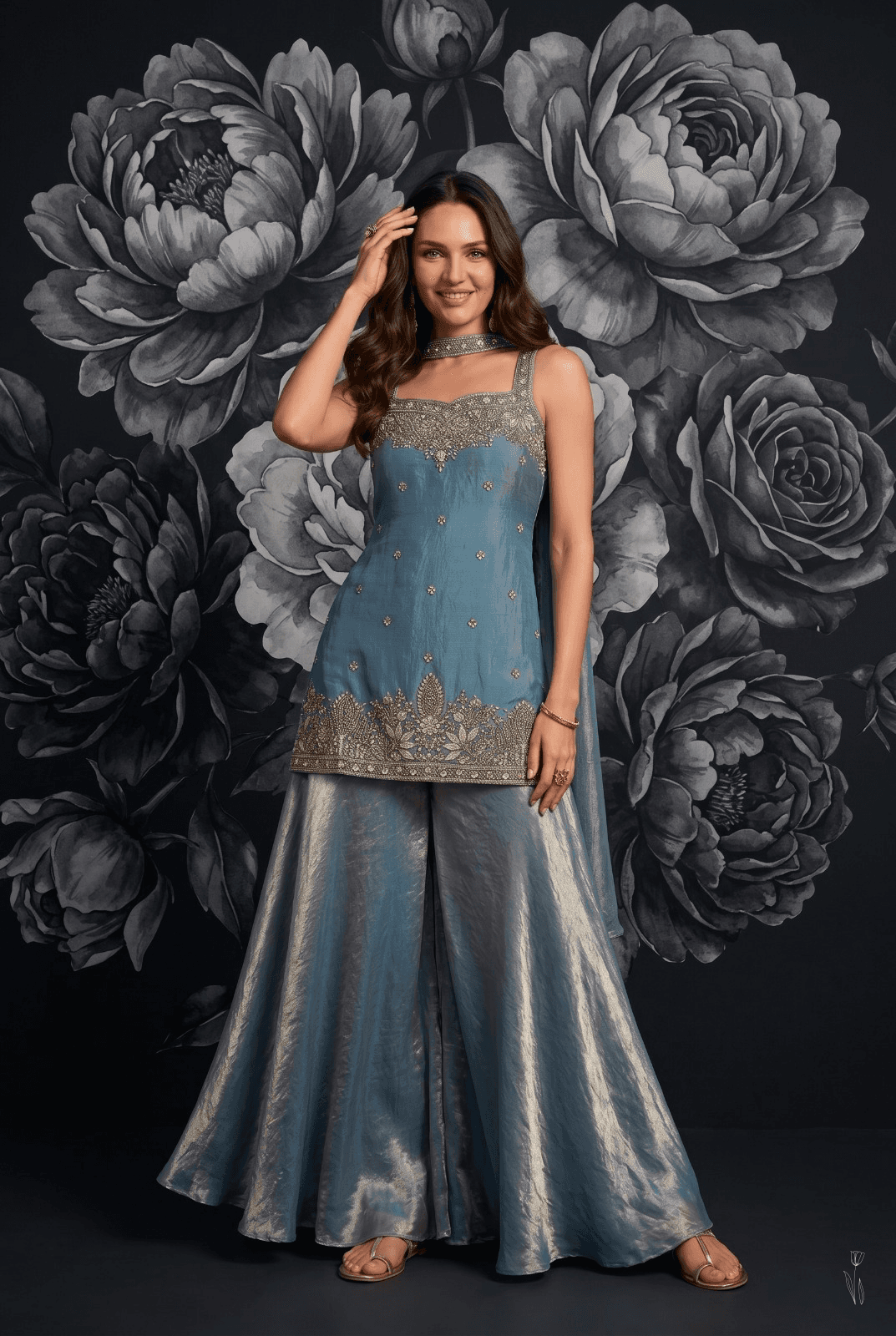
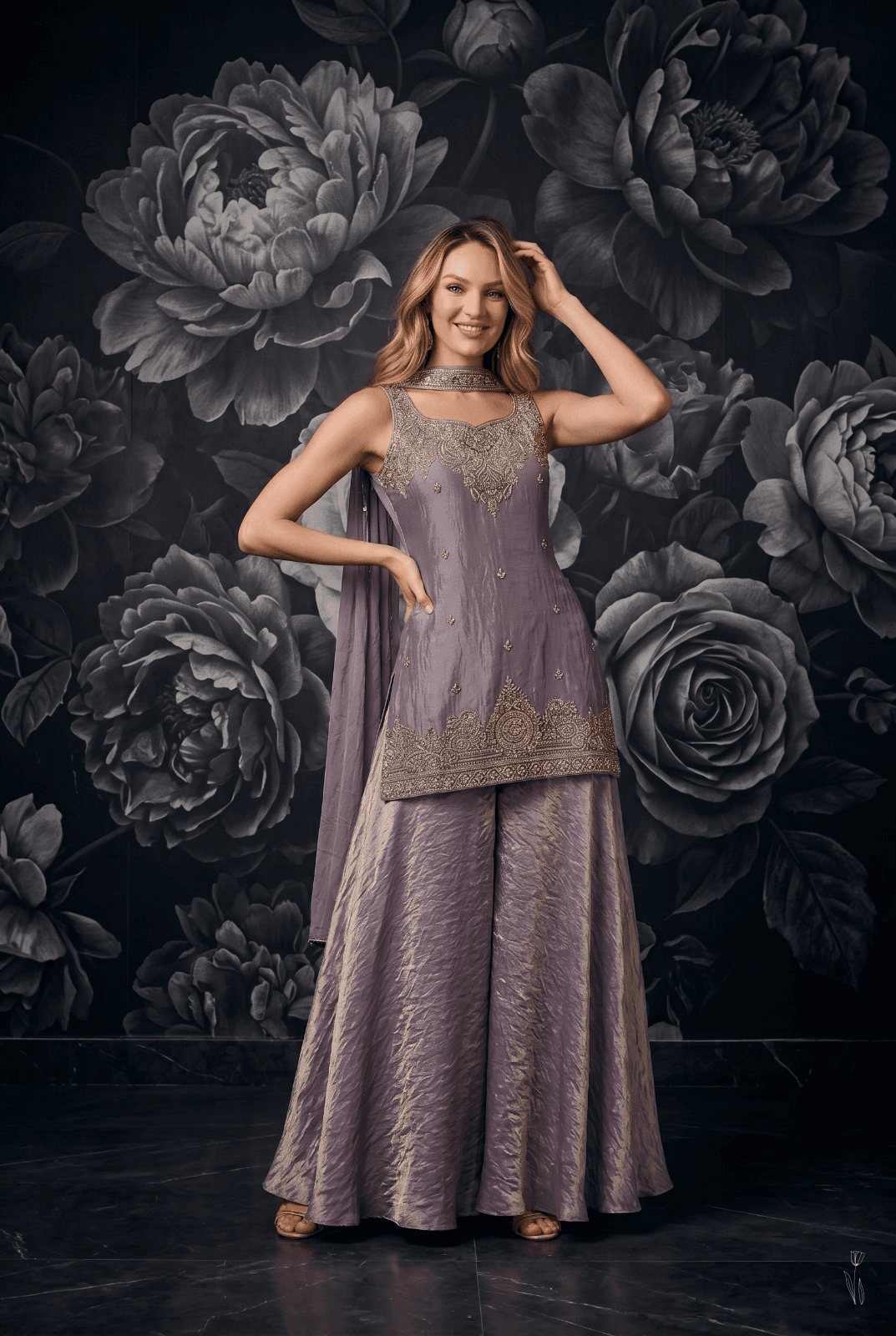
The walima (the reception hosted by the groom's family) and modern receptions tend to be more elegant and a touch more formal-Western in feel. Refined silk sarees, slim-cut Anarkalis or a fine lehenga with restrained, high-quality embroidery work beautifully here — shine, but controlled.
Thought through for German winters
Many celebrations in Germany fall in cold months or take place in draughty halls. Plan for layers that stay elegant: a heavy pashmina or silk shawl over the pallu, an embroidered cape jacket over an Anarkali, a long coat for the journey that disappears at the door. If you're unsure which look suits which evening, message us — we'll put together whole wardrobes for a wedding weekend with you, by chat or video call.
Frequently asked questions
Can I wear red as a guest?+
Better to avoid classic bridal red, especially for the ceremony — that colour traditionally belongs to the bride. Muted reds, burgundy or wine at other events are usually fine; when in doubt, check quickly with the host family.
Which colours should I avoid at the wedding?+
Bridal red and — depending on tradition — pure white, which in many South Asian cultures is associated with mourning. Black is increasingly accepted but can be sensitive with very traditional families. Ask if unsure.
What do I wear to the mehndi or holud?+
Bright, joyful tones like yellow, orange, green or pink in comfortable silhouettes — a flowing Anarkali or embroidered three-piece, with light jhumkas or floral jewelry. There's plenty of sitting, eating and dancing.
How do I stay elegant and warm in a German winter?+
With elegant layers: a heavy pashmina or silk shawl over the pallu, an embroidered cape jacket over an Anarkali, and a long coat for the journey. We're happy to help build a winter-ready festive look.
Shop the guide
Hand-picked and ready to order