Jewelry
How to Style Indian Jewelry
Jhumka, tikka, choker, bangles: Indian jewelry follows its own grammar. How to match it to neckline and weave — and why less is often more.
Indian jewelry is rarely an accessory — it is part of the outfit, sometimes even its highlight. But that's exactly where the art lies: an Anarkali, a saree and a lehenga each ask for something different, and more gold is not automatically more elegance. A short grammar.
The pieces and their language
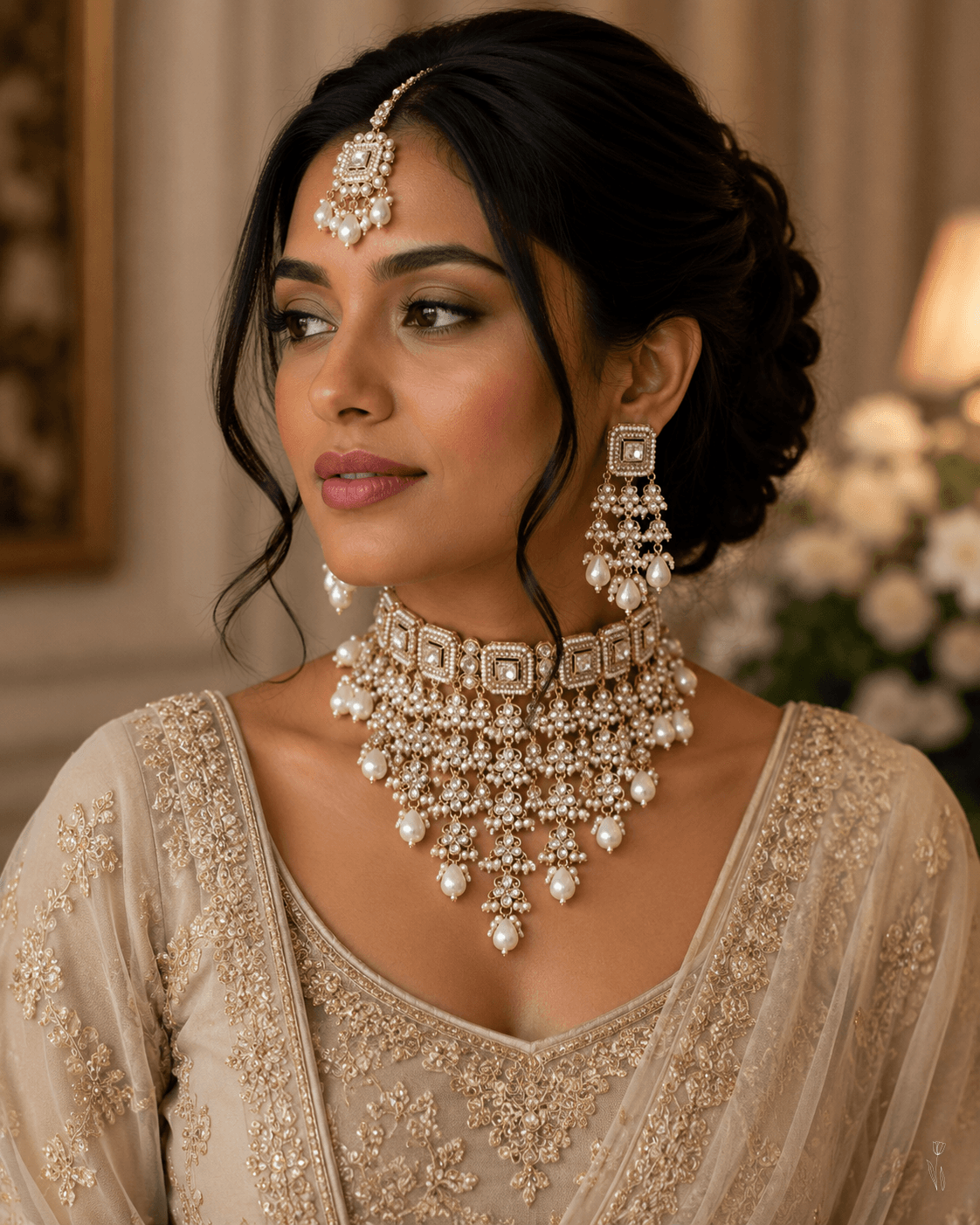
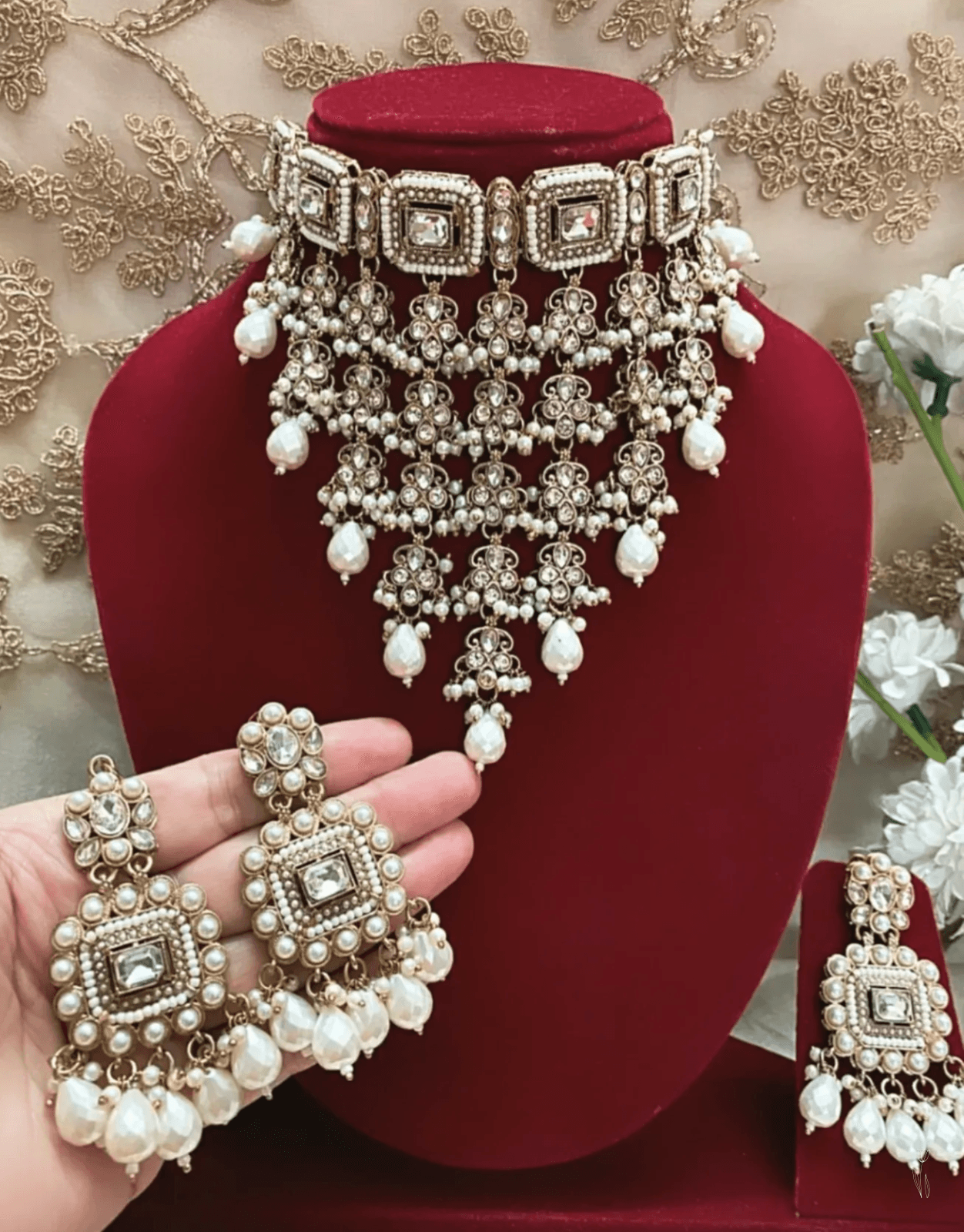
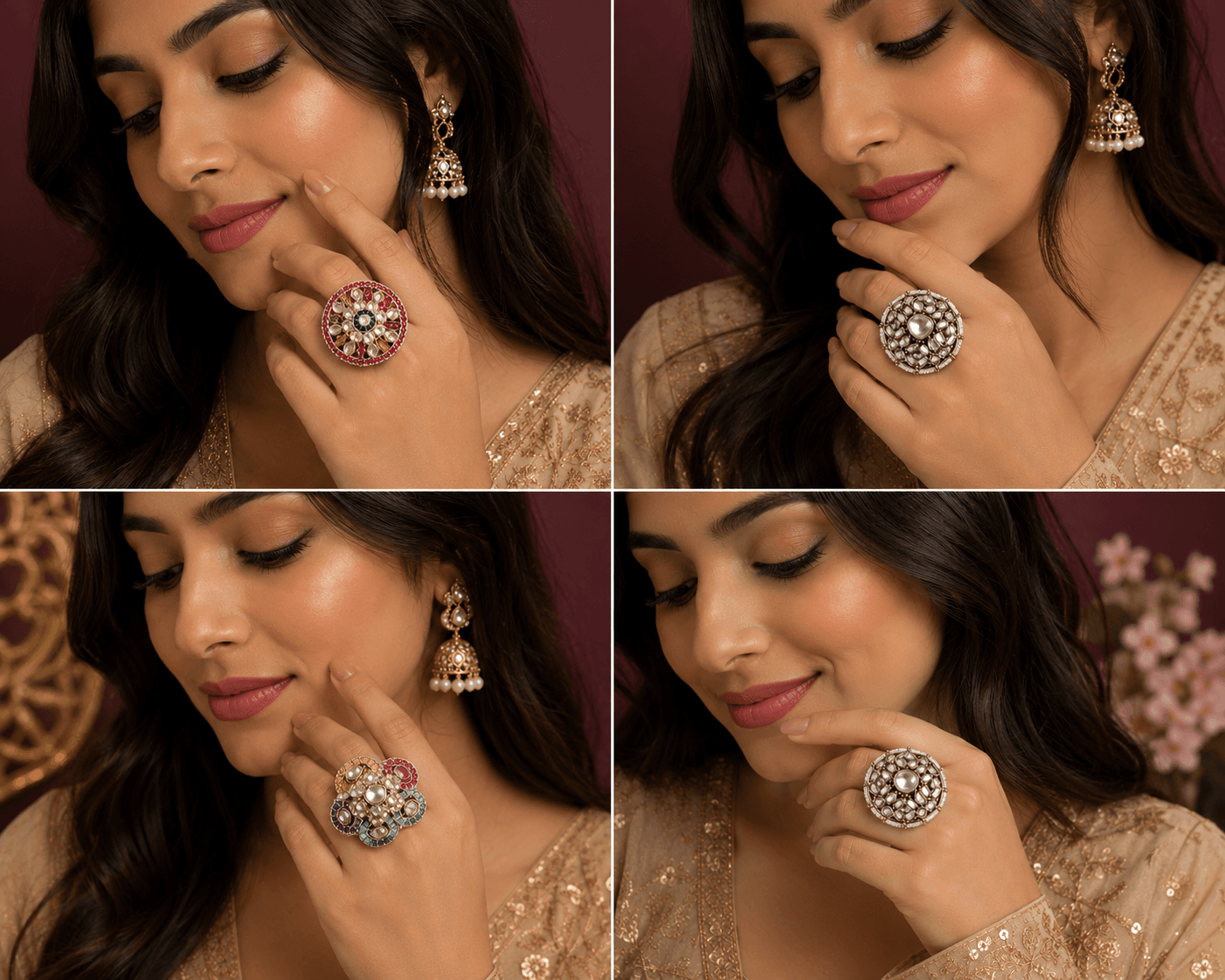
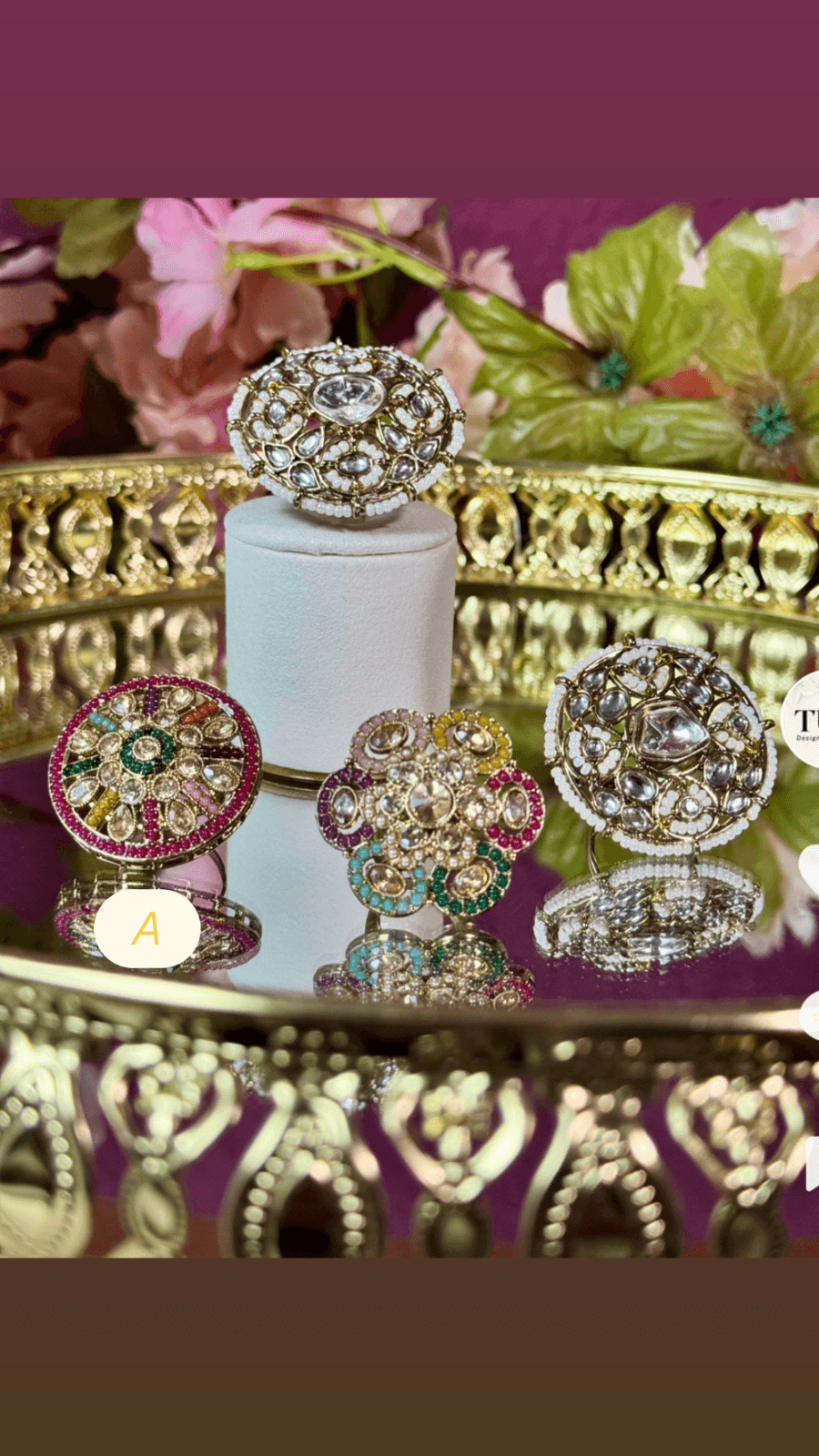
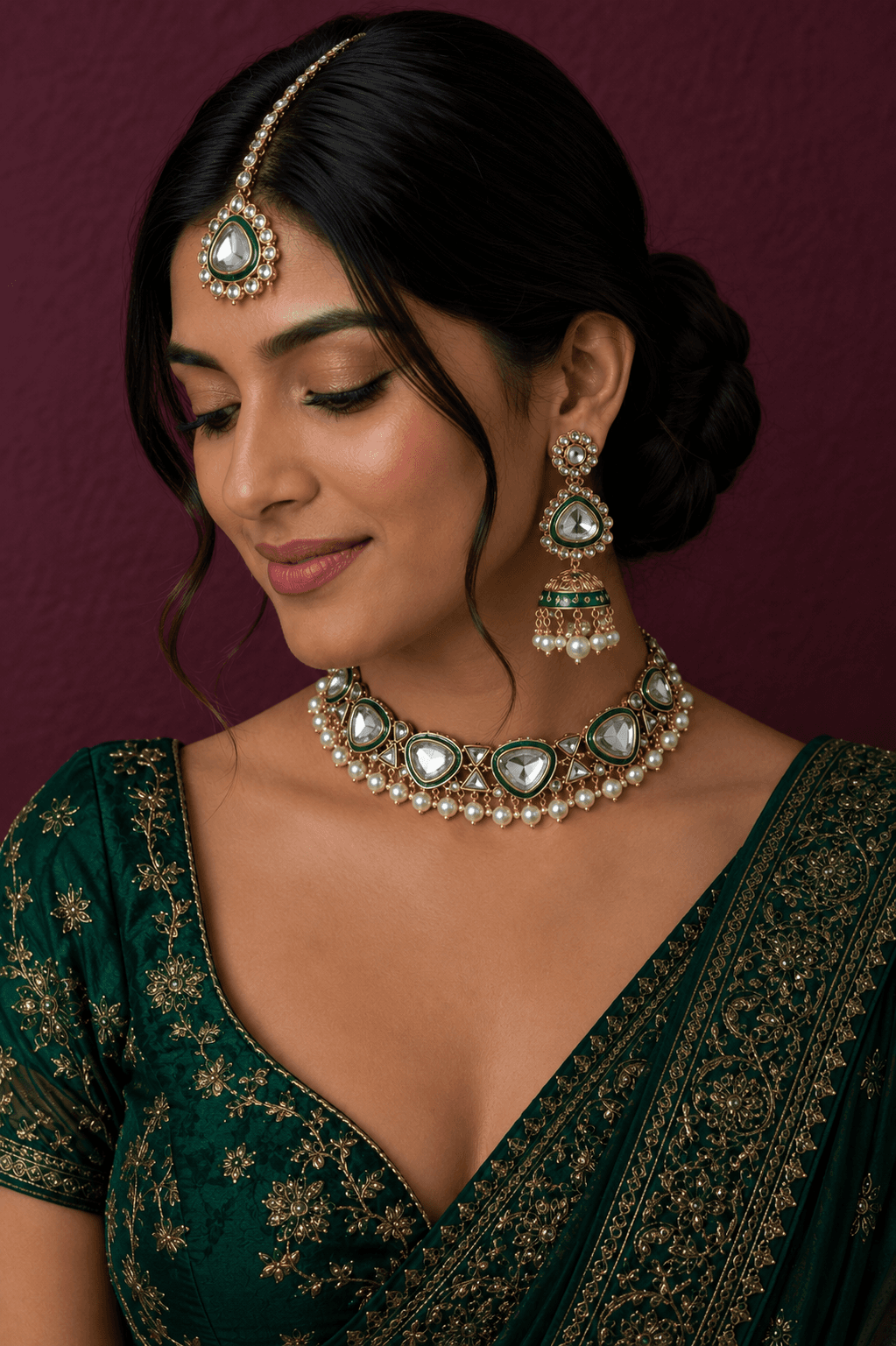
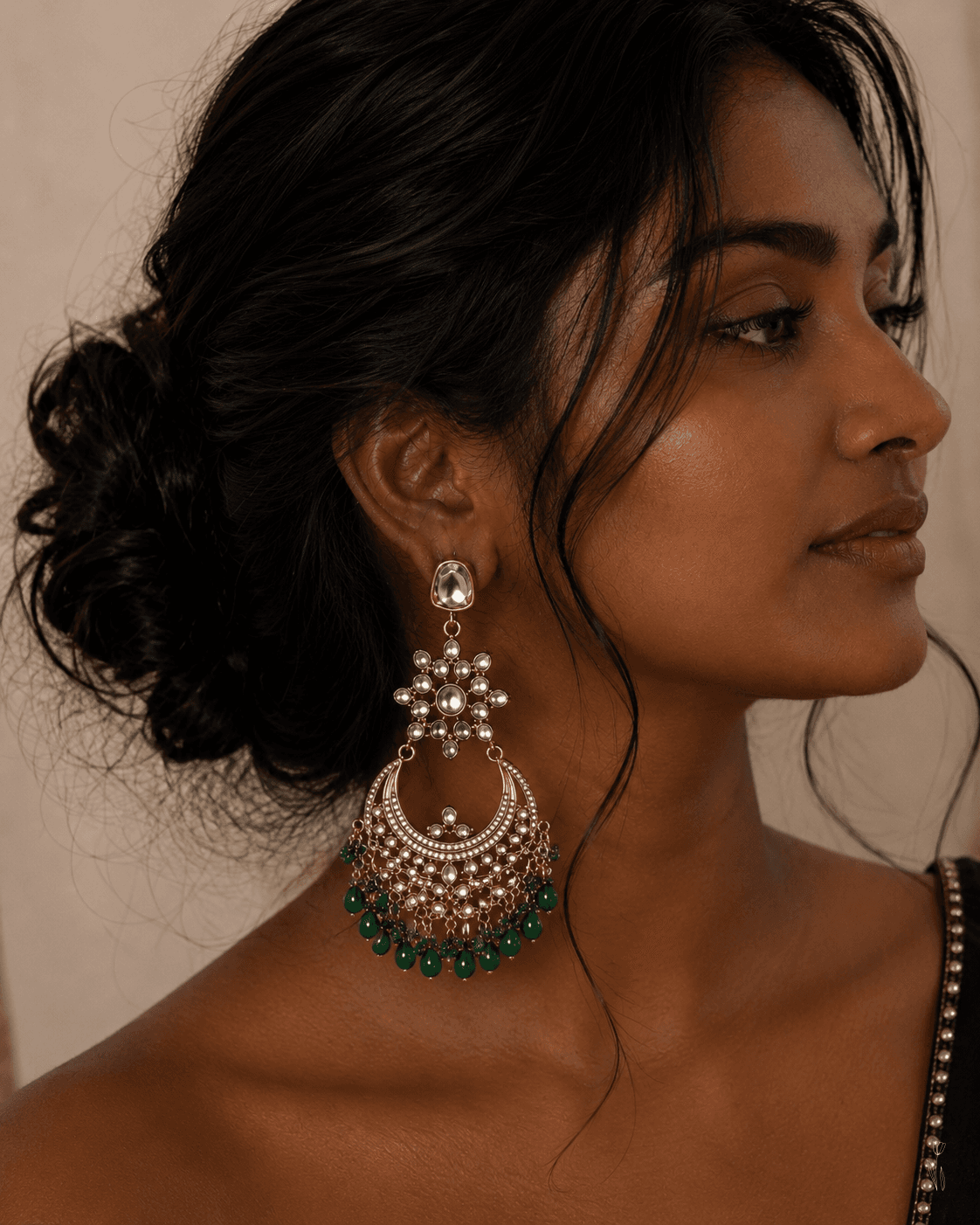
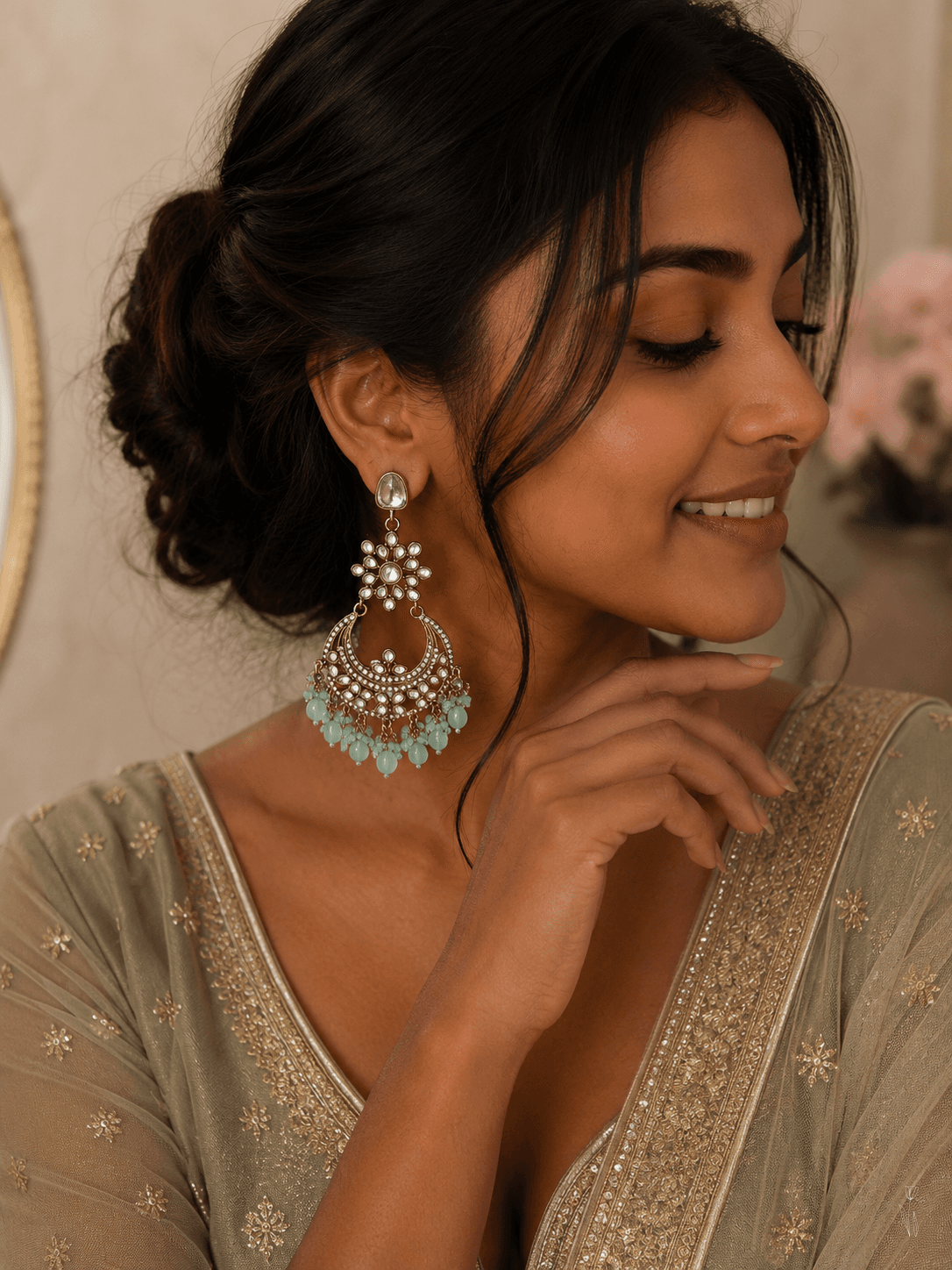
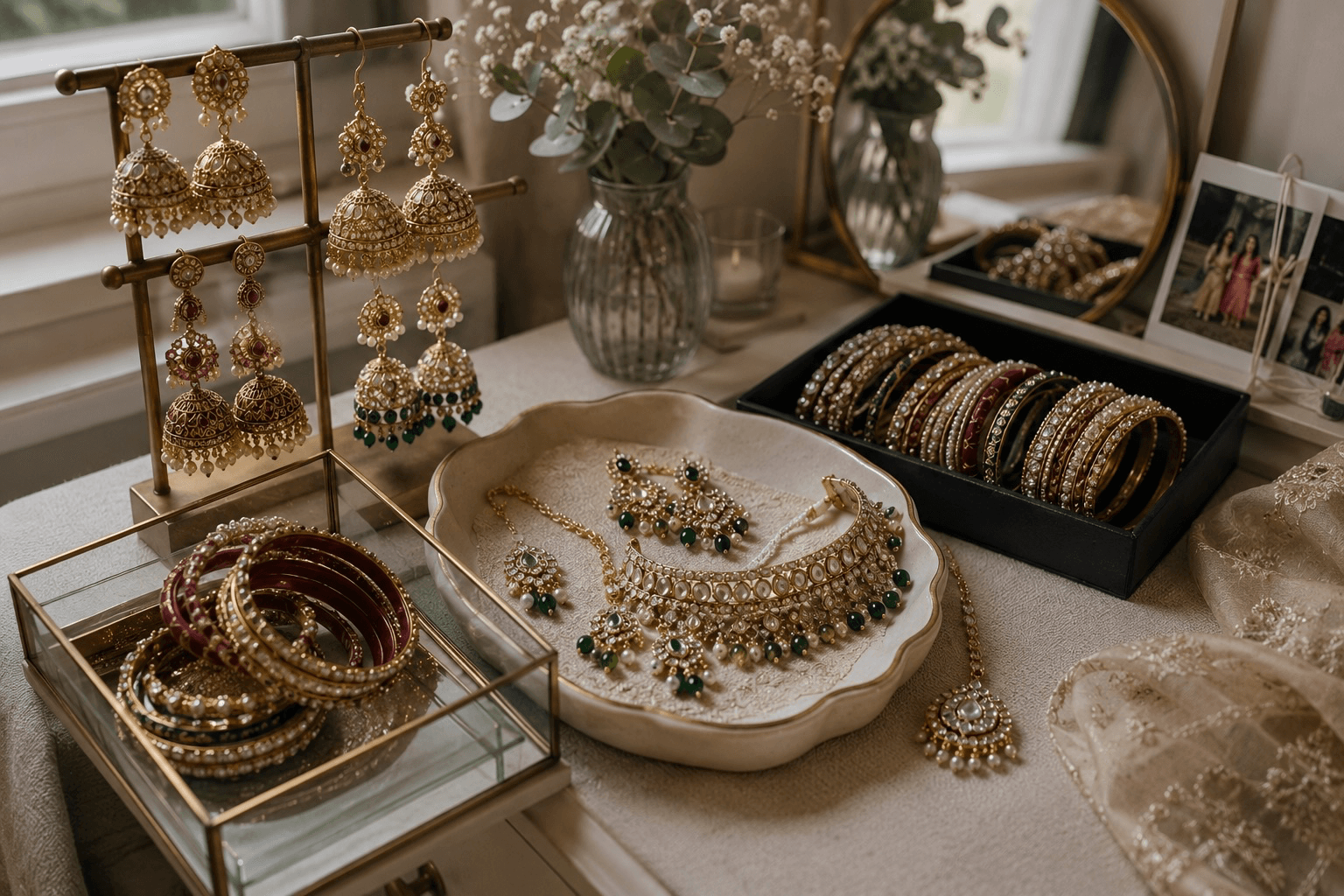
Jhumkas — the bell-shaped drop earrings — are the most versatile piece of all: festive enough for Eid, light enough for any day. The maang tikka sits at the parting and frames the face, classic with a lehenga or saree at big occasions. The choker hugs the neck and needs bare collarbones; long necklaces (rani haar) fill open necklines. Bangles and kada chime with every movement — many thin ones for a playful look, a few broad ones for a modern one. And the nath (nose ring), haath phool (hand jewelry) and payal (anklets) add the fine accents.
Choosing jewelry by neckline
The neckline decides the necklace. A high, closed collar takes no choker — here earrings and tikka shine instead. A deep round or sweetheart neckline calls for a choker or a layered necklace that traces the line. A V-neck likes a longer chain that drops into the point. Rule of thumb: the barer the neck, the more neck jewelry the look can carry — and vice versa.
The one rule: the richer the weave, the quieter the jewelry
The single most important principle: the more elaborate the fabric and embroidery, the more restrained the jewelry — and vice versa. A heavily embroidered Banarasi or a zardozi lehenga needs no more than clean jhumkas and perhaps a tikka; anything more competes with the weave and both lose. A plain solid-colour silk, by contrast, is the perfect stage for a statement set. Fabric and jewelry hold a conversation — let both shout at once and you get noise.
Metal, colour and how they play together
Match the metal to the zari: gold thread loves gold jewelry and kundan/polki, while silvery zari suits silver and oxidised looks. Coloured stones can pick up a colour from the outfit — emerald green to echo a green border, say. And don't mix too many metals in one look; one dominant tone reads more refined than a busy blend.
Bridal versus everyday
For the bride, everything may come together — a full jewelry set, tikka, nath, haath phool, layered necklaces — because this is the one day when abundance is the message. Everyday and for guests, the opposite holds: one, at most two clean pieces. A good pair of jhumkas and slim bangles carry a whole look. A guest who wears full bridal jewelry stands out — and that, see above, is precisely not the goal.
When you're unsure
Pairing jewelry with a particular piece is a matter of practice — and most fun done together. Send us a photo of your outfit on Instagram (@tuli_germany) and we'll suggest combinations, honestly and without sales pressure. Sometimes our advice is: leave it off. That's part of it too.
Frequently asked questions
What jewelry goes with a high neckline?+
With a high, closed collar, skip the neck jewelry and let earrings and a maang tikka do the work. A choker or long necklace only comes into its own when the neck is bare.
How much jewelry suits a heavily embroidered saree?+
Little. The richer the weave and embroidery, the quieter the jewelry — clean jhumkas and perhaps a tikka are enough. Statement sets belong with plain, solid-colour pieces.
Should jewelry match gold or silver zari?+
Yes, it reads most harmonious: gold thread pairs with gold jewelry and kundan/polki, silvery zari with silver and oxidised looks. Within one look, let a single metal tone lead.
Can I wear a full jewelry set as a guest?+
Better not — the full set with tikka, nath and layered necklaces is the bride's domain. As a guest, one or two clean pieces, like good jhumkas and slim bangles, carry a look most elegantly.
Shop the guide
Hand-picked and ready to order