Fabric Care: Looking After Silk, Jamdani & Embroidered Pieces
A well-cared-for saree becomes an heirloom. How to wash, dry, store and protect silk, Jamdani and embroidered pieces from dry heating, damp and brittle zari.
Fine South Asian textiles are made to last forever — but only if you treat them right. The good news: the rules are simple and quickly become routine with a little care. The bad news: a single hot wash can undo weeks of handwork. Here's what actually matters.
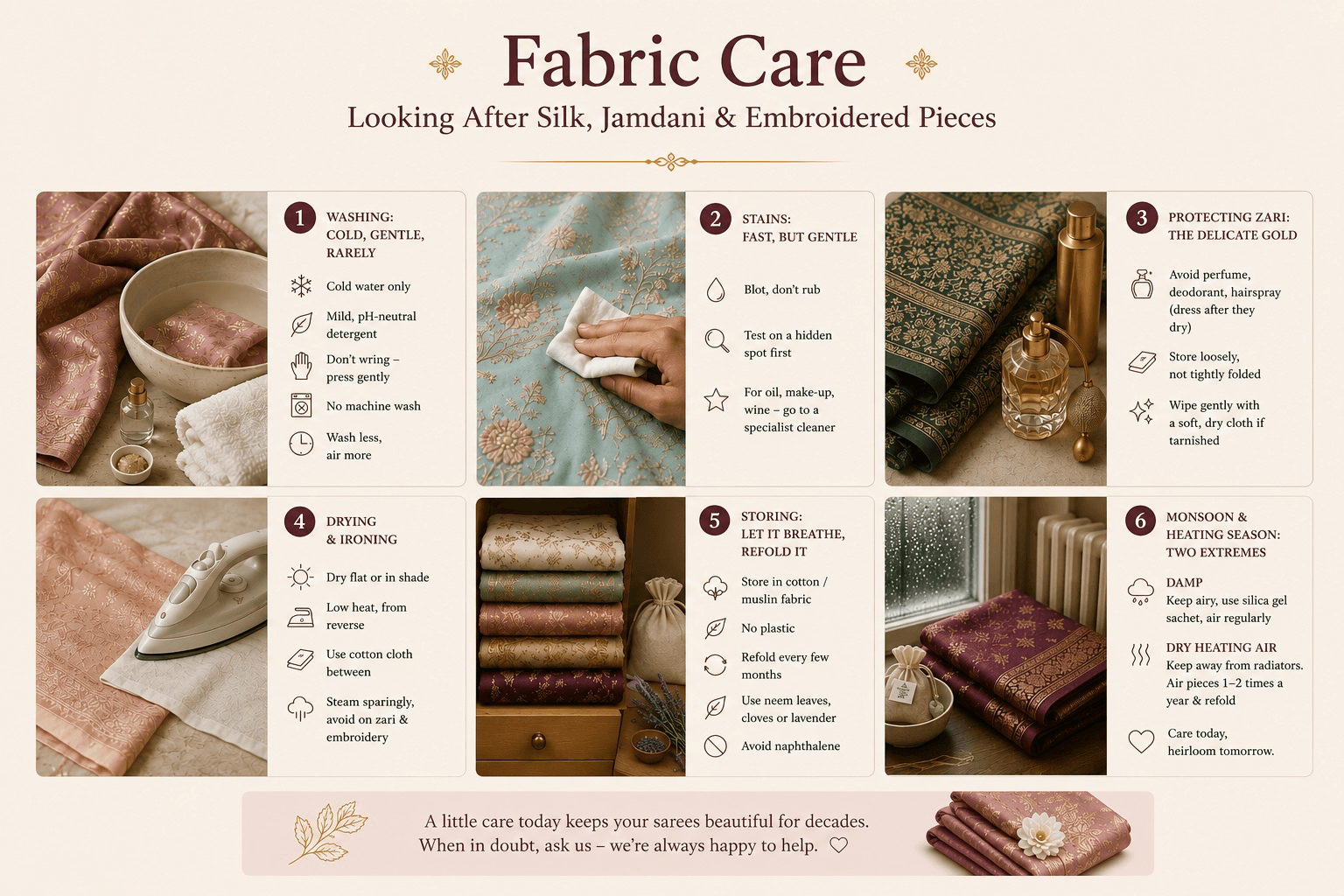
Washing: cold, gentle, rarely
Pure silk, real Jamdani and heavily embroidered pieces do not belong in the machine. When in doubt, professional cleaning is the safest choice. If you hand-wash, use cold water with a mild, pH-neutral detergent or a dedicated silk shampoo, and don't leave anything soaking. Never wring — gently press the fabric between two towels instead. And the less often, the better: airing and spot-cleaning spare many pieces a wash altogether.
Stains: fast, but gentle
With a fresh stain, speed matters more than force. Blot up excess liquid immediately with a clean, light-coloured cloth — never rub, which drives the stain deeper and can rough up the weave. Test any product on a hidden spot first. For oil, make-up or wine on precious silk, don't risk anything: go straight to a specialist cleaner — an explained stain is cheaper than a ruined saree.
Protecting zari: the delicate gold
Zari — the gold and silver thread in Banarasi, Kanjeevaram and festive embroidery — is the most delicate part of any piece. Metal threads oxidise and turn brittle under folding and friction. Never let zari come into direct contact with perfume, deodorant or hairspray (dress after all of that has dried), and store zari-rich pieces loosely, not tightly folded. A faint tarnish can often be eased off gently with a soft, dry cloth.
Drying and ironing
Dry flat or over a padded rail in the shade — direct sun fades colours and makes silk brittle. Iron on a low setting, ideally from the reverse and through a cotton or muslin cloth; always avoid embroidered and zari-rich areas or smooth them from the back. Use steam sparingly and never directly on metal threads.
Storing: let it breathe, refold it
Store your pieces cool, dark and dry — wrapped in cotton or muslin, never in plastic, which traps moisture and lets silk "suffocate". Refold zari- and embroidery-rich sarees along a different line every few months so the threads don't snap at the crease. Avoid naphthalene; neem leaves, dried cloves or lavender keep moths away without stressing the fabric.
Monsoon and heating season: two extremes
Damp (a humid summer or a clammy cellar) and dry heating air are the two greatest enemies. Against damp, use airy storage, occasional airing and a silica-gel sachet in the wardrobe — mould and foxing on silk are almost impossible to undo. Against the dry winter air of German flats, keep zari-rich pieces away from radiators. Take festive pieces out once or twice a year, air them and refold them. That way they last decades — and if you're ever unsure about a particular piece, message us; we'll tell you honestly how to look after it.
Frequently asked questions
Can I machine-wash a silk saree?+
Better not. Pure silk, real Jamdani and heavy embroidery belong in professional cleaning or a careful cold hand wash with a mild detergent — no wringing, dried flat in the shade.
How do I store an embroidered saree properly?+
Cool, dark and dry, wrapped in cotton or muslin — never plastic. Refold along a different line every few months so zari and embroidery threads don't break at the creases.
How do I care for zari gold threads?+
Keep zari away from perfume, deodorant and hairspray, fold it loosely rather than tightly, and protect it from friction. Light tarnish can be eased off carefully with a soft, dry cloth.
How do I protect silk from dry heating air?+
Keep zari-rich pieces away from radiators, don't let the air get too dry, and air festive pieces once or twice a year. A silica-gel sachet, conversely, helps against too much moisture.
Shop the guide
Hand-picked and ready to order